FAQ
Frequently Asked Questions

Frequently Asked Questions
Our extra virgin organic olive oil comes 100% from the Messenia region in the southwest of the Peloponnese (Greece).
Messenia is considered one of the world's best olive oil growing regions. The interplay of mineral-rich soils, abundant sunshine, and the fresh breezes of the Ionian Sea creates perfect conditions for the Koroneiki olive. We source our oil directly from select small-scale farmers there. We guarantee absolute purity: it is a single-vineyard oil. This means that each bottle contains only oil from the same harvest year – without any admixture of older stocks from previous years or other oils.
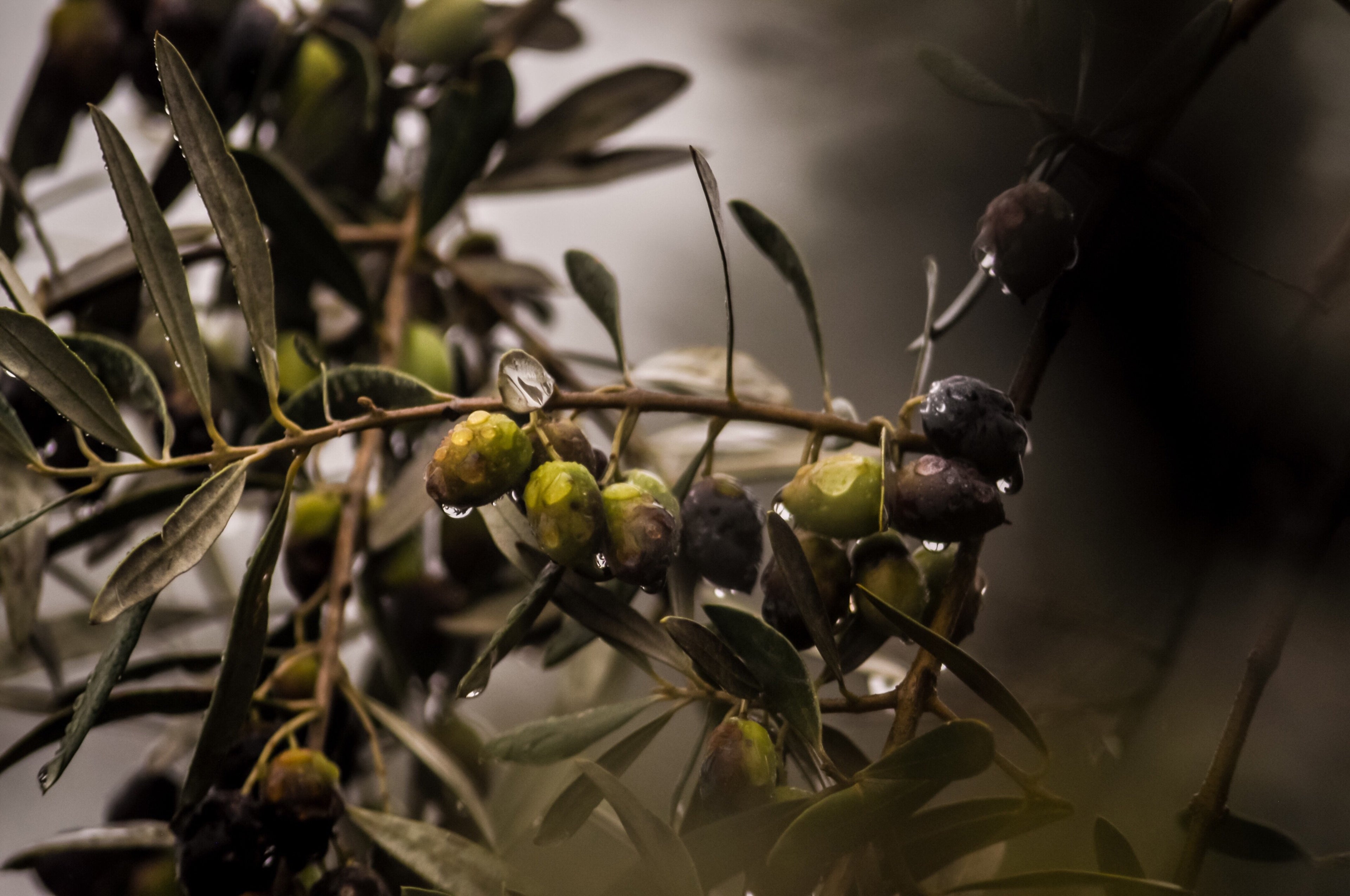
We rely 100% on the Koroneiki olive (monocultivar). It is one of the oldest and best olive varieties in Greece and is often referred to by experts as the "Queen of Olives".
Although the fruits of this variety are very small and yield less compared to other varieties, their quality is unbeatable: The Koroneiki olive is famous for its extremely high polyphenol (antioxidant) content. This not only makes the oil particularly valuable for nutrition and very stable (long shelf life), but also gives it its distinctive character: intensely fruity, with notes of fresh herbs and a peppery finish.
The difference lies primarily in the origin and the harvesting philosophy .
Industrial olive oil is often optimized for volume and low price. To supply the enormous quantities required, oils from different countries, regions, and even different vintages are frequently blended (so-called "blends"). Furthermore, olives for the mass market are usually harvested very late to extract more oil from the fruit – but this comes at the expense of flavor and healthy nutrients.
At ELJO, we take the opposite approach:
“Agureleo” is the Greek name for a particularly high-quality olive oil from the early harvest.
It is produced exclusively from green olives in their early stages of ripening (usually in October/November). While the oil yield is significantly lower at this time, as green olives contain far less oil than fully ripened fruit, requiring more olives for a liter of oil, the result justifies this focus on quality over quantity. Agureleo boasts the highest concentration of healthy plant compounds (polyphenols) and an incomparably intense aroma. It tastes fresher, grassier, and more "wild" than conventional olive oil.
Many industrial oils are filtered to make them appear crystal clear on the shelf. We deliberately avoid this process because filtration removes not only impurities but also valuable flavor compounds and antioxidants. Our oil is a pure, natural product. It still contains tiny particles of olive pulp (so-called suspended solids). These particles are important flavor carriers and contribute to the full, original aroma.
Note: It is perfectly normal for these sediment particles to settle at the bottom of the bottle over time. This sediment is not a defect, but rather proof of the natural processing.
Yes, absolutely! This slight scratching or burning sensation in the throat is not a defect, but a crucial quality characteristic of high-quality olive oil.
This sensation is caused by the high content of polyphenols (bioactive antioxidants), which are particularly abundant in our early-harvest oil (Agureleo). In Greece, this is considered proof of freshness: if you feel the tingle, you know the oil is still full of vitality and healthy ingredients. An olive oil that doesn't tingle at all and just tastes "greasy," on the other hand, is often old, refined, or lacking in valuable nutrients.
Our harvest is carried out traditionally and gently by hand, using hand-operated shaking rakes. The olives fall gently onto nets laid out under the trees.
This method is labor-intensive, but crucial for quality and the environment:
Yes, completely. Our olive oil is subject to the strict controls of the EU organic regulation.
This guarantees you:
In addition, each batch is analyzed in the laboratory to ensure that our oil is absolutely pure and free of pollutants.
Extra virgin olive oil is the heart of the Mediterranean diet, which is considered one of the healthiest diets worldwide.
The secret lies in the combination of two main components:
Important : The content of these valuable ingredients depends heavily on the harvest time. Because our olives are harvested very early and green (Agureleo), the concentration of these natural bioactive substances in ELJO oils is particularly high compared to oils harvested later in the season.
Polyphenols are secondary plant compounds that occur naturally to protect plants from pests and UV radiation. In humans, they act as powerful antioxidants.
Their most important task is protecting our body cells from so-called "oxidative stress." They help neutralize free radicals that can be generated in the body by environmental pollution or stress. They also contribute to protecting blood lipids from oxidation.
The ELJO advantage: Green, unripe olives have the highest polyphenol content. Because our oil comes from the early harvest, it is particularly rich in these valuable substances – significantly richer than oils from fully ripe, black olives. Incidentally, you can taste polyphenols! They are responsible for the subtle bitterness and the characteristic tickle in the throat.
The polyphenol content correlates directly with certain sensory properties of the oil. Even without laboratory analysis, a high density of antioxidants can be recognized by two characteristics:
In professional olive oil tasting, bitterness and pungency are considered positive quality attributes. An oil that tastes neither bitter nor pungency generally indicates a low concentration of these bioactive components.
The acidity level (measured in free fatty acids) is considered one of the most important chemical indicators of olive oil quality. It provides information about the condition of the olives at the time of pressing.
A low acidity level indicates that the olives used were healthy and undamaged, and that the time between harvesting and pressing was kept extremely short. Damage or long storage times lead to oxidation and thus to an increase in acidity levels.
While EU regulations for the "Extra Virgin Olive Oil" quality category allow a limit of 0.8%, our oil far exceeds this standard. Thanks to immediate processing, we regularly achieve peak values of less than 0.3%.
“Extra Virgin Olive Oil” (often also called Extra Vergine) defines the highest legally recognized quality grade for olive oil in Europe.
The designation is composed of two strict criteria:
Oils that do not meet these criteria (e.g., due to off-flavors or higher acidity levels) are classified into lower quality grades. Our oil not only meets the requirements of the "Extra" grade, but significantly exceeds the minimum standards.
Yes, extra virgin olive oil is a relevant source of fat-soluble vitamins, especially vitamin E and vitamin K.
Because our oil is exclusively cold extracted, these natural vitamins are preserved as much as possible, unlike in refined oils.
Yes, as a purely natural product, our olive oil is ideally suited for almost all diets and nutritional regimens.
Yes, absolutely, it is perfectly suited for 90% of all applications in your kitchen.
You can easily use it to steam vegetables, fry potatoes, prepare fish, or refine sauces (temperatures up to approx. 170 °C). The many antioxidants in our oil protect it from the heat.
Where is the limit? Because our oil is naturally cloudy (unfiltered), it contains tiny fruit particles. These would burn at extremely high temperatures. For searing steaks at very high temperatures or for deep-frying, we therefore recommend high-heat fats such as ghee, clarified butter, or coconut oil. For everything else, our Agureleo is an optimal and flavorful choice.
To preserve the fresh aroma and healthy ingredients for as long as possible, you should protect your oil from its three biggest enemies: light, oxygen, and heat.
Tip: You don't necessarily have to put the oil in the refrigerator. While it will keep it fresh for a long time there, it will solidify and become cloudy (don't worry, this is a completely natural physical process).
Unopened and stored in a cool, dark place, our olive oil has a shelf life of at least 18 months. You can always find the exact best-before date on the label.
Our recommendation for the best taste: Since our Agureleo is a naturally cloudy product, it behaves somewhat differently than filtered oil. As long as the bottle is sealed, the many polyphenols protect the oil very well. However, as soon as you open the bottle and oxygen comes into contact with the fine fruit particles, the natural ripening process begins.
We therefore recommend that you use the bottle within 2 to 3 months of opening. During this time, you can enjoy its full freshness and maximum intensity of flavor. After that, the oil won't spoil, but it will gradually lose its peak flavor.
If you notice white flakes or cloudiness in the oil, there's no need to worry – quite the opposite!
Olive oil is a pure natural product. Like butter, it solidifies in cold temperatures. Below approximately 7°C, the natural waxes and fatty acids begin to crystallize. The oil becomes cloudy or forms white lumps.
This is a quality indicator: it shows that the oil has not been chemically treated or heated to high temperatures to remain artificially liquid.
What to do? Simply place the bottle at room temperature in the kitchen. The flakes will dissolve on their own as soon as the oil warms up. The quality and taste will not be affected in any way.
Because we don't filter our oil, it still contains fine particles of olive pulp. These suspended particles settle to the bottom over time and can form a dark sediment at the bottom of the bottle.
This is not dirt or a defect, but proof of the naturalness of our oil.
Our tip: Give the bottle a gentle shake now and then before use to distribute the delicious fruit aromas. If any sediment has formed, you can eat it without hesitation – it has a very strong flavor. Alternatively, you can simply leave it in the bottle.
Can I use the 5-liter canister directly or should I transfer the contents?
For daily use, we strongly recommend that you transfer the oil into a handy dark glass bottle (e.g. 500 ml or 750 ml).
There are two important reasons for this:
Important pro tip for our naturally cloudy oil: Since fine fruit particles can settle at the bottom of unfiltered oil over time, you should vigorously swirl or shake the canister before each transfer. This redistributes the sediment and aromas evenly, ensuring you have the full flavor in every bottle.
We ship our packages reliably with DHL. Here you can find our current shipping rates:
We process your order as quickly as possible, usually on the same or next day. Within Germany, you will generally receive your package within 1 to 3 business days. Deliveries to Austria and Switzerland usually take about 3 to 5 business days.
Yes, of course. As soon as your package leaves our warehouse, we will automatically send you a shipping confirmation by email. This email will contain your DHL tracking number and a tracking link, allowing you to track the status of your delivery live at any time.
Don't worry, we bear the entire shipping risk. We pack our bottles very securely to prevent breakage. However, should something happen during transport in the rare event that it does, we will of course provide an immediate and free replacement.
This can happen in two ways:
We ship our goods in sturdy cardboard boxes. To protect the glass bottles from breakage, we use special biodegradable packing peanuts as cushioning material.
Please don't be surprised: These white chips may look like polystyrene, but they are made from 100% plant starch (e.g., corn). They are fully compostable and dissolve in water. You can simply dispose of them in your organic waste bin.
Yes, gladly. Since we ship with DHL, you can conveniently have your order delivered to a Packstation or post office.
When placing your order, please ensure that you correctly enter your personal post number and the Packstation number in the address fields.
We currently deliver our products to Germany, Austria and Switzerland.
You can return ordered goods to us within 14 days, provided the bottles are unopened and still sealed. Since these are food products, we unfortunately cannot accept returns of opened products for hygiene reasons.
Here's how it works: Simply send us a short email with your order number. We will then send you all the information you need for the return.
We kindly ask you to bear the return shipping costs yourself. This allows us to keep prices permanently low for everyone (unless, of course, the goods are damaged or defective, in which case we will naturally cover the costs).
You can pay conveniently and securely with us using one of the following methods:
No, registration is not mandatory. You can easily place your order as a guest.
A customer account is optional. It simply offers the advantage that you don't have to re-enter your address details for future orders and that you have an overview of your previous purchases.
We do not include a printed invoice in the package. You will automatically receive your invoice as a PDF via email as soon as your order has been shipped.
If you cannot find the email, please check your spam folder or send us a message and we will resend it to you immediately.
Yes, that is generally possible, as long as we have not yet handed your package over to the shipping service provider.
Please email us as soon as possible. If the shipment hasn't yet left our warehouse, we can change the address or cancel the order. If the package is already on its way, our standard return policy applies.